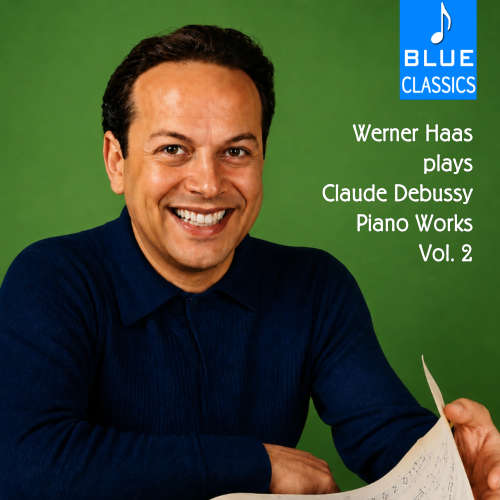
 Werner Haas plays Claude...
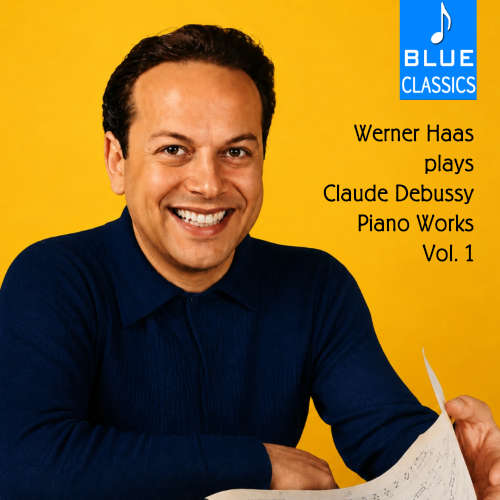 Werner Haas plays Claude...

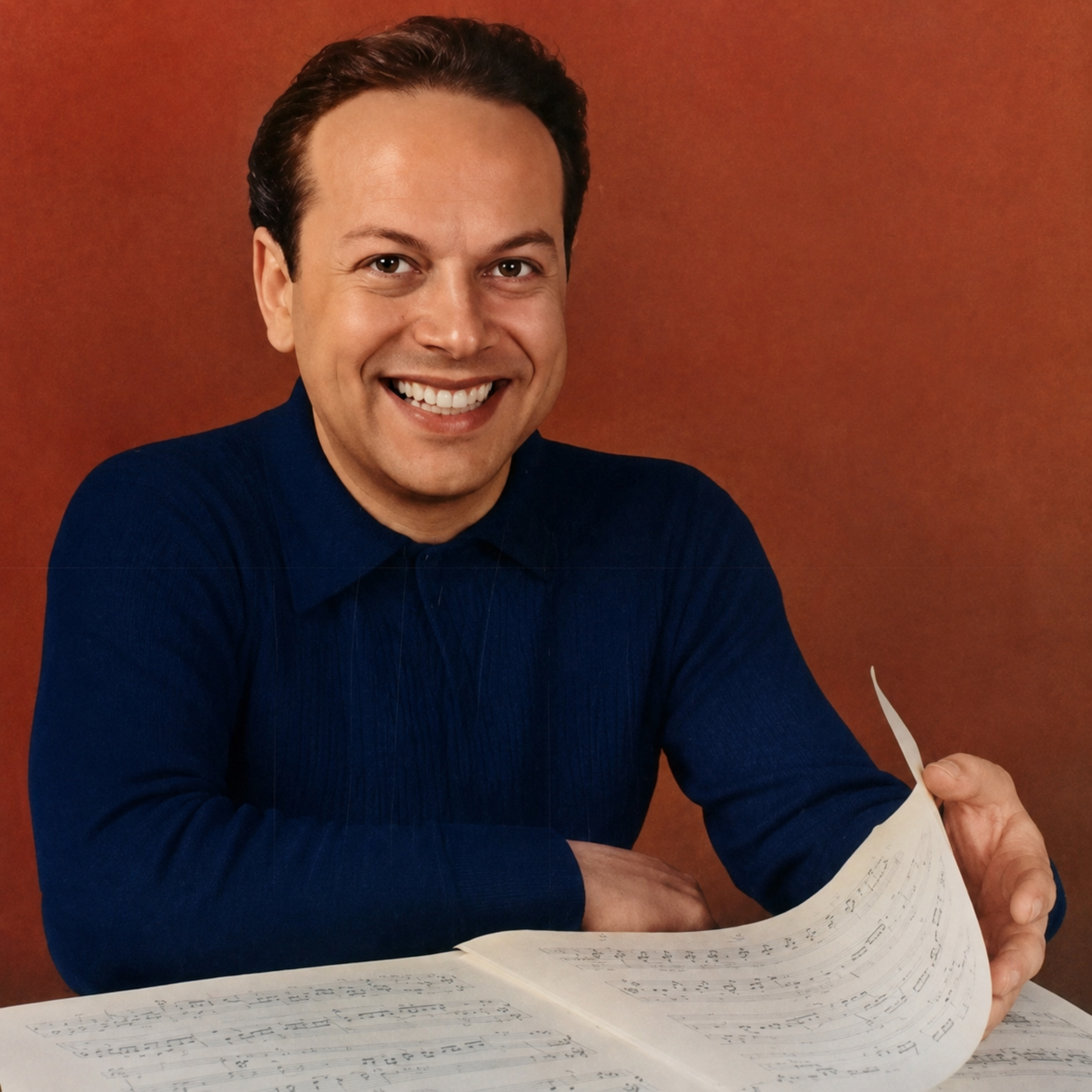
Werner Haas - pianist
Werner Haas (b. 3 March 1931 – d. 11 October 1976) was a German classical pianist known particularly for his interpretations of French repertoire, above all the music of Claude Debussy and Maurice Ravel. Born in Stuttgart, Baden-Württemberg, on 3 March 1931, he showed an early affinity for music and an unusual intuition at the piano. As a child he improvised melodies and picked out tunes despite having received little formal instruction. Haas himself later played down the idea that he had been exceptionally gifted, attributing his early development more to persistent curiosity and interest in music.His formative years were disrupted by the Second World War, which affected schooling and cultural life in Stuttgart and delayed his more systematic musical education. In 1944, at the age of 13, Haas won a local piano competition in Stettin. It was his only participation in a competition, as his reserved personality made the competitive environment unattractive to him. The victory nevertheless led to his first public performances, where his poise, technique and expressive phrasing attracted attention.
In 1947, Haas entered the Stuttgart Academy of Music at the age of 16, where he studied piano until 1954 with Lilli Kröber-Asche, a respected pianist and harpsichordist known particularly for her interpretations of Mozart. Her teaching emphasized precision in articulation and phrasing and helped Haas establish the technical foundation that would characterize his playing. From 1954 to 1956 he continued his studies in Saarbrücken in master classes with Walter Gieseking. Gieseking's approach to French repertoire, with its emphasis on tonal color, nuanced phrasing and stylistic fidelity, had a lasting influence on Haas and strengthened his interest in the music of Debussy and Ravel.
Haas began his professional career with a recital in Stuttgart in 1955, which received critical attention for its technical assurance and interpretive maturity. The following year he made his concerto debut with Tchaikovsky's Piano Concerto No. 1 and the Stuttgarter Philharmoniker under Hans Hörner. From 1956 onward he toured extensively throughout Europe, appearing as a recitalist and concerto soloist in major music centers. His engagements included performances with the Berliner Philharmoniker, Rotterdam Philharmonic under Franz-Paul Decker, Zagreb Philharmonic under Milan Horvat, the ORTF Philharmonic in Paris, the Residentie Orkest Den Haag under Willem van Otterloo, and the Tonhalle Orchestra Zurich. In Germany he also appeared frequently with the Stuttgarter Kammerorchester under Karl Münchinger, including European tours.
A significant turning point came in 1958, following a successful appearance in Paris, when Philips executive Igor Maslowski signed Haas to a multi-year recording contract. The agreement led to a prolific recording career during the 1960s and allowed Haas to document a broad repertoire extending from Chopin and Beethoven to Prokofiev and other Russian composers, alongside the French music with which he became particularly associated. Haas never performed in the Americas, so his international career remained centered on Europe. His major European appearances included a celebrated recital at London's Wigmore Hall in November 1967 and a concert in Milan in July 1970.
Haas had already begun recording in the late 1950s, making solo albums for Epic devoted to composers including Frédéric Chopin and Claude Debussy. In 1960 he recorded Chopin's complete set of 14 Waltzes for Epic (LC 3738), a release praised in the January 1961 issue of *High Fidelity* for its lyrical sensitivity and technical finesse.
His most important recording project was a comprehensive edition of Claude Debussy's piano music for Philips. The project resulted in a five-LP set and earned the Grand Prix du Disque in 1970. Haas's recordings of Maurice Ravel's piano music from the same period received the Edison Prize in Amsterdam in 1970. Among his other Philips projects was a collection of 15 toccatas spanning three centuries, recorded in 1968. His concerto repertoire included the complete piano-orchestra works of Pyotr Ilyich Tchaikovsky, recorded in 1972 with Eliahu Inbal conducting the National Opera Orchestra of Monte Carlo. In 1975, Haas recorded Rachmaninoff's Piano Concerto No. 2 and *Rhapsody on a Theme of Paganini* with Inbal and the Frankfurt Radio Symphony Orchestra. He also recorded Prokofiev's Piano Sonatas Nos. 2 and 4.
Haas's playing was particularly associated with clarity, tonal color and restraint in French repertoire. His interpretations of Debussy and Ravel emphasized subtle phrasing, delicate pedaling and transparency rather than heavy Romantic expression. The influence of Gieseking was evident in his sensitivity to color and his preference for a light, controlled piano sound. His recordings of Debussy's *Images* and *Children's Corner*, among others, demonstrated an approach that combined structural clarity with an understated expressive quality. His reserved personality was likewise reflected in his performances, which could convey intensity without theatricality.
Haas's career was at its height in the mid-1970s when it was abruptly ended by his death on 11 October 1976. He was 45 years old when he died in a car accident near Nancy, France, after his automobile collided with a truck.
Following his death, Haas's recordings continued to be reissued and to attract listeners, particularly his interpretations of Debussy, Ravel and other French composers. Philips maintained his catalogue through numerous reissues, including a remastered two-volume edition of his complete Debussy piano works released in 1993. His recordings subsequently appeared in digital formats, keeping his interpretations available to new generations of listeners. Annual CD sales were reported at approximately 100,000 units in 2002, reflecting continuing interest in his work. The 2004 *Hommage à Werner Haas* collection from MDG also preserved rare broadcast performances from the 1960s and 1970s.
Haas's recordings remain particularly associated with the French repertoire that shaped his artistic identity. His Debussy and Ravel recordings, together with his performances of Beethoven, Chopin, Prokofiev and Russian repertoire, document the career of a pianist whose European concert and recording activities were cut short at the age of 45, but whose interpretations have continued to circulate through successive generations of reissues.